
DHS Moves to End Duration of Status for F-1, J-1, and I Visa Holders: What Students and Schools Must Know
On May 5, 2026, the Department of Homeland Security took a major step toward fundamentally reshaping how international students and exchange visitors are admitted into the United States. DHS submitted to the Office of Management and Budget a final rule that would eliminate Duration of Status for F-1, J-1, and I visa holders and replace it with a fixed admission period capped at four years. If finalized as proposed, the rule could take effect as early as September 2026.
“This is the most consequential change to student visas in three decades, and most international students do not yet realize what is coming.”
For more than 30 years, F-1 and J-1 students have been admitted for Duration of Status, meaning they could remain in the United States as long as they maintained enrollment and made academic progress. Their Form I-94 carried no fixed end-date. Designated School Officials at universities had authority to extend their stay, approve school transfers, and update SEVIS records when students moved from a bachelor’s program into a master’s or doctoral program. Under the proposed rule, that authority would shift entirely to USCIS. Students whose programs run longer than four years would have to file Form I-539, submit biometrics, pay a filing fee, and prove continued eligibility under tight discretionary standards.
The implications are far-reaching. PhD programs typically run five to eight years. Doctoral candidates would face mid-program filings with USCIS officers who have wide discretion to deny.
Today, an F-1 student who finishes a bachelor’s degree can move to a master’s program at the same or a different university simply by working with the DSO to update the I-20 and SEVIS record. Under the proposed rule, that flexibility disappears. Undergraduate students would be barred from changing schools or programs during their first academic year. Graduate students would be prohibited from changing programs at all once enrolled. A student who completes a bachelor’s degree and wants to begin a master’s program would still need a new I-20, but the four-year admission clock from the initial entry would not reset automatically. If the combined bachelor’s and master’s timeline exceeds four years, the student must file Form I-539 with USCIS and wait for approval, with no guarantee. School transfers in the first year would be effectively blocked unless SEVP grants an exception.
The post-completion grace period would shrink from 60 days to 30 days, with unlawful presence beginning the day after a denial.
“For Indian students, this rule changes the math. The United States has always been the top destination, but uncertainty now competes with opportunity.”
The proposal drew more than 34,800 public comments before the September 29, 2025 deadline, with the overwhelming majority in opposition. The American Hospital Association warned that the rule would disrupt the training of roughly 17,000 J-1 physicians serving high-need specialties in rural and underserved communities. Universities and major higher education associations argued the change would damage U.S. competitiveness in STEM and AI, where international students fill 70 percent of math and computer science seats. NAFSA highlighted that USCIS already faces a backlog of 11.3 million cases, and DHS itself estimates the rule would generate an additional 414,000 extension filings each year, more than 1.6 times the volume of Form I-539 applications filed in fiscal year 2024.
“USCIS cannot handle 414,000 new filings on top of an 11.3 million case backlog. Delays will not be the exception. They will be the rule.”
OPT and STEM OPT face some of the most significant operational changes. Today, an F-1 student applies for the standard 12-month post-completion OPT by filing Form I-765 with USCIS up to 90 days before program completion and up to 60 days after. STEM degree holders working for E-Verify employers can apply for an additional 24-month STEM OPT extension by filing a new Form I-765 along with Form I-983 training plan. Throughout OPT and STEM OPT, the student’s stay is tied to the underlying F-1 Duration of Status. Under the proposed rule, that link breaks. A student approved for OPT or STEM OPT would not automatically be authorized to remain for the full work authorization period. Instead, the student would have to file an extension of stay with USCIS to align the I-94 with the EAD validity. If the I-94 expires before the EAD, the work authorization document may become meaningless. Processing delays at USCIS, which today routinely run several months for Form I-765 alone, would compound when stacked with required I-539 filings. USCIS Director Joseph Edlow has publicly stated he intends to limit work authorization for F-1 students beyond their enrollment, signaling that OPT itself may face further restrictions. Indian nationals, who make up roughly half of all OPT and STEM OPT participants, stand to be disproportionately affected.
Legal challenges are widely expected once the rule becomes final, with the likely argument being that it is arbitrary and capricious under the Administrative Procedure Act.
“The smart move is not panic. The smart move is preparation. International students should treat their I-94 as a deadline, not an assumption.”
Until the final rule is published in the Federal Register, current law continues to apply. Students should confirm program end-dates with their DSO, keep meticulous records of academic progress, budget for possible USCIS filings, and consult an immigration attorney about backup options including O-1, H-1B, and EB-2 NIW. Schools and universities should prepare for a fundamental shift in their role. International student offices will need to track fixed I-94 expiration dates for every F-1 and J-1 student, build internal compliance calendars that account for new USCIS filings, retrain DSOs and Responsible Officers on the boundaries of their reduced authority, advise admitted students realistically about whether programs can be completed within four years, and reorganize staffing to support the surge of Form I-539 applications. Recruitment messaging, websites, and orientation materials will need to be updated to set accurate expectations for incoming students. Schools should also coordinate with general counsel to prepare for potential litigation involvement and amicus participation.
The rule is not yet final. The text submitted to OMB has not been made public, and the final version may differ from the proposal. What is clear is that the era of open-ended student admission is approaching its end, and the entire international education ecosystem is preparing for a new framework where every additional day in the United States must be earned through a USCIS filing.
DHS Moves to End Duration of Status for F-1, J-1, and I Visa Holders: What Students and Schools Must Know
On May 5, 2026, the Department of Homeland Security took a major step toward fundamentally reshaping how international students and exchange visitors are admitted into the United States. DHS submitted to the Office of Management and Budget a final rule that would eliminate Duration of Status for F-1, J-1, and I visa holders and replace it with a fixed admission period capped at four years. If finalized as proposed, the rule could take effect as early as September 2026.
“This is the most consequential change to student visas in three decades, and most international students do not yet realize what is coming.”
For more than 30 years, F-1 and J-1 students have been admitted for Duration of Status, meaning they could remain in the United States as long as they maintained enrollment and made academic progress. Their Form I-94 carried no fixed end-date. Designated School Officials at universities had authority to extend their stay, approve school transfers, and update SEVIS records when students moved from a bachelor’s program into a master’s or doctoral program. Under the proposed rule, that authority would shift entirely to USCIS. Students whose programs run longer than four years would have to file Form I-539, submit biometrics, pay a filing fee, and prove continued eligibility under tight discretionary standards.
The implications are far-reaching. PhD programs typically run five to eight years. Doctoral candidates would face mid-program filings with USCIS officers who have wide discretion to deny.
Today, an F-1 student who finishes a bachelor’s degree can move to a master’s program at the same or a different university simply by working with the DSO to update the I-20 and SEVIS record. Under the proposed rule, that flexibility disappears. Undergraduate students would be barred from changing schools or programs during their first academic year. Graduate students would be prohibited from changing programs at all once enrolled. A student who completes a bachelor’s degree and wants to begin a master’s program would still need a new I-20, but the four-year admission clock from the initial entry would not reset automatically. If the combined bachelor’s and master’s timeline exceeds four years, the student must file Form I-539 with USCIS and wait for approval, with no guarantee. School transfers in the first year would be effectively blocked unless SEVP grants an exception.
The post-completion grace period would shrink from 60 days to 30 days, with unlawful presence beginning the day after a denial.
“This rule changes the math for every international student. The United States has always been the top destination, but uncertainty now competes with opportunity.”
The proposal drew more than 34,800 public comments before the September 29, 2025 deadline, with the overwhelming majority in opposition. The American Hospital Association warned that the rule would disrupt the training of roughly 17,000 J-1 physicians serving high-need specialties in rural and underserved communities. Universities and major higher education associations argued the change would damage U.S. competitiveness in STEM and AI, where international students fill 70 percent of math and computer science seats. NAFSA highlighted that USCIS already faces a backlog of 11.3 million cases, and DHS itself estimates the rule would generate an additional 414,000 extension filings each year, more than 1.6 times the volume of Form I-539 applications filed in fiscal year 2024.
“USCIS cannot handle 414,000 new filings on top of an 11.3 million case backlog. Delays will not be the exception. They will be the rule.”
OPT and STEM OPT face some of the most significant operational changes. Today, an F-1 student applies for the standard 12-month post-completion OPT by filing Form I-765 with USCIS up to 90 days before program completion and up to 60 days after. STEM degree holders working for E-Verify employers can apply for an additional 24-month STEM OPT extension by filing a new Form I-765 along with Form I-983 training plan. Throughout OPT and STEM OPT, the student’s stay is tied to the underlying F-1 Duration of Status. Under the proposed rule, that link breaks. A student approved for OPT or STEM OPT would not automatically be authorized to remain for the full work authorization period. Instead, the student would have to file an extension of stay with USCIS to align the I-94 with the EAD validity. If the I-94 expires before the EAD, the work authorization document may become meaningless. Processing delays at USCIS, which today routinely run several months for Form I-765 alone, would compound when stacked with required I-539 filings. USCIS Director Joseph Edlow has publicly stated he intends to limit work authorization for F-1 students beyond their enrollment, signaling that OPT itself may face further restrictions. Students from India and China, who together account for more than 80 percent of OPT and STEM OPT participants, would feel the largest impact, but students from every major source country would be affected.
Legal challenges are widely expected once the rule becomes final, with the likely argument being that it is arbitrary and capricious under the Administrative Procedure Act.
“Preparation matters more than reaction. Every international student should now plan as if every additional day in the United States must be earned, not assumed.”
Until the final rule is published in the Federal Register, current law continues to apply. Students should confirm program end-dates with their DSO, keep meticulous records of academic progress, budget for possible USCIS filings, and consult an immigration attorney about backup options including O-1, H-1B, and EB-2 NIW. Schools and universities should prepare for a fundamental shift in their role. International student offices will need to track fixed I-94 expiration dates for every F-1 and J-1 student, build internal compliance calendars that account for new USCIS filings, retrain DSOs and Responsible Officers on the boundaries of their reduced authority, advise admitted students realistically about whether programs can be completed within four years, and reorganize staffing to support the surge of Form I-539 applications. Recruitment messaging, websites, and orientation materials will need to be updated to set accurate expectations for incoming students. Schools should also coordinate with general counsel to prepare for potential litigation involvement and amicus participation.
The rule is not yet final. The text submitted to OMB has not been made public, and the final version may differ from the proposal. What is clear is that the era of open-ended student admission is approaching its end, and the entire international education ecosystem is preparing for a new framework where every additional day in the United States must be earned through a USCIS filing.
By: Rahul Reddy
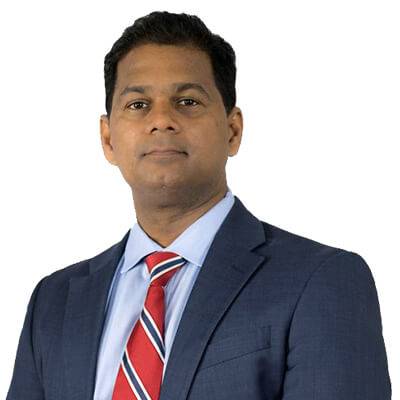
Rahul Reddy is the founding partner of Reddy Neumann Brown PC. He founded our firm in 1997 and has over 28 years of experience practicing employment-based immigration. Rahul‘s vast knowledge of the complex immigration system makes him an invaluable resource and an expert in the field. His personal experience with the immigration system has made him empathetic to each of his clients’ cases and empowered him to help others achieve the American Dream.
Rahul‘s dedication to serving the immigrant community is evident, from his daily free conference calls to his weekly immigration Q&As on Facebook and YouTube Live. He is an active member of the immigrant community and one of the founders of ITServe Alliance. He has been a member of American Immigration Lawyers Association since 1995.