
Federal Judge Blocks Trump’s 2026 F-1 Student Visa Restrictions: What International Students Need to Know
A federal judge has dealt a substantial legal blow to the Trump administration’s efforts to tighten immigration rules for international students, exchange visitors, and foreign journalists. On November 16, 2026, the U.S. District Court for the District of Massachusetts invalidated a Department of Homeland Security (DHS) rule that would have replaced the longstanding “Duration of Status” system with fixed periods of authorized admission.
The ruling in *Presidents’ Alliance on Higher Education and Immigration v. U.S. Department of Homeland Security, marks a major victory for the international students and American universities that challenged the administration’s restrictions.
U.S. District Judge F. Dennis Saylor IV found that DHS had exceeded its statutory authority by imposing certain academic restrictions and had not adequately justified its broader regulatory changes under the Administrative Procedure Act (APA).
The court vacated the rule in full, rather than simply delaying its implementation. As a result, the existing Duration of Status framework remains in force unless the ruling is stayed or overturned on appeal.
Understanding the Duration of Status System
For decades, international students admitted to the United States in F-1 status have generally been permitted to stay for the Duration of Status, often referred to as D/S.
Under this system, students may remain in the country while enrolled in an authorized academic program, as long as they maintain their immigration status and follow the applicable regulations.
Unlike many other nonimmigrant categories, F-1 students are not typically given a specific expiration date for their authorized stay when they are admitted.
Instead, their permission to remain depends on continued compliance with requirements, including maintaining a full course of study, keeping their Student and Exchange Visitor Information System (SEVIS) records up to date, and observing relevant employment restrictions.
This approach reflects the realities of higher education, where research commitments, dissertation work, changes in academic focus, or other valid circumstances may extend the time needed to complete a program.
However, Duration of Status does not grant an unlimited right to remain in the United States. Students must continue to satisfy immigration requirements, and completing an academic program generally begins a limited grace period, unless the individual qualifies for another authorized activity or immigration benefit.
It is also important to distinguish visa validity from immigration status. An F-1 visa stamp may expire while a student remains in lawful F-1 status within the United States. The visa stamp generally determines whether a person may seek admission, while the authorized period of stay is determined separately.
What the Trump Administration’s Rule Would Have Changed
On July 17, 2026, the Department of Homeland Security (DHS) published a final rule titled Establishing a Fixed Time Period of Admission and an Extension of Stay Procedure for Nonimmigrant Academic Students, Exchange Visitors, and Representatives of Foreign Information Media.
The rule proposed a fundamental overhaul of how the United States administers the F, J, and I nonimmigrant classifications.
Under the proposed system, international students generally would have been admitted for fixed periods of no more than four years, even if their academic programs required more time to complete.
Students who needed to remain in the United States beyond their authorized admission periods would have had to file formal applications for extensions of stay with U.S. Citizenship and Immigration Services (USCIS).
The rule also proposed limits affecting academic mobility, including changes to educational objectives, transfers between institutions, and enrollment in additional academic programs.
Foreign media representatives with I status also would have been subject to fixed admission periods, replacing the existing duration-based framework.
DHS said the changes would strengthen immigration oversight, improve fraud detection, and enable the government to periodically reassess whether foreign nationals remained eligible for their respective immigration classifications.
The administration contended that the existing system allowed some foreign nationals to stay in the United States for extended periods without adequate individualized immigration review.
Why the Federal Court Rejected the Regulation
Judge Saylor’s November 16 decision addressed both flaws in DHS’s rulemaking process and the limits of the agency’s authority under federal law.
The Administrative Procedure Act requires federal agencies to provide reasoned explanations for regulatory decisions, consider key aspects of the issues before them, and respond reasonably to significant objections raised during the rulemaking process.
The court concluded that DHS had not met these requirements.
Specifically, the court found that DHS had not adequately assessed the costs and benefits of replacing Duration of Status with fixed periods of admission.
The government also failed to explain sufficiently why existing monitoring systems could not address the concerns it had identified.
One key consideration was SEVIS, the federal database through which educational institutions report information about international students and exchange visitors.
Instead of adequately considering whether improvements to SEVIS could achieve its objectives, DHS adopted a more burdensome approach that required additional immigration applications and government adjudications.
The court also questioned whether the proposed restrictions were consistent with the purposes of the F-1 classification established by Congress.
Judge Saylor stressed that Congress created the student visa program to support legitimate educational opportunities in the United States.
The court determined that certain restrictions on academic progress and educational choices exceeded DHS’s lawful regulatory authority.
As Judge Saylor explained:
“The statute simply does not grant DHS such broad and open-ended authority to undermine the F-1 visa program.”
The decision thus involved more than a disagreement with the administration’s immigration priorities. The court concluded that the regulation failed to comply with established legal requirements governing federal agency action.
A Legal Dispute That Began Before the Rule Took Effect
The November ruling came after months of litigation involving educational associations, universities, and labor organizations.
On August 18, 2026, a coalition led by the Presidents’ Alliance on Higher Education and Immigration and NAFSA: Association of International Educators filed a lawsuit challenging the regulation.
The plaintiffs maintained that the rule would disrupt academic programs, create significant administrative costs, and weaken the United States’ ability to attract international talent.
On September 14, Judge Saylor issued a nationwide preliminary injunction barring the regulation from taking effect.
The government appealed that preliminary ruling to the U.S. Court of Appeals for the First Circuit on September 30.
While the preliminary appeal was still pending, however, the district court continued to address the merits of the case.
On November 16, the court entered summary judgment for the plaintiffs, rejected the government’s competing motion, and vacated the regulation under 5 U.S.C. § 706.
The distinction has legal significance. A preliminary injunction typically offers temporary relief while litigation is ongoing. By contrast, a final judgment vacating a regulation eliminates the rule’s legal effect, subject to further appellate proceedings.
What the Decision Means for International Students
The immediate effect is that international students can continue to rely on the existing Duration of Status framework.
For F-1 students, the November decision does not establish a new four-year limit on admission or require an application to USCIS for an extension solely because their academic programs last longer than four years.
Students pursuing doctoral degrees, undertaking extended research, or completing other legitimate educational requirements therefore retain the flexibility provided by current immigration regulations.
The decision also preserves the existing regulatory framework for eligible school transfers, changes in academic programs, and additional educational programs.
Students must still comply with all applicable immigration requirements, including maintaining valid SEVIS records, securing any required school authorization, and following employment restrictions.
The ruling does not end USCIS oversight, bar enforcement against students who violate their status, or guarantee approval of future immigration benefits.
For J-1 exchange visitors, the decision likewise prevents the new fixed-admission system from taking effect. However, J-1 participants must continue meeting program-specific requirements, including authorized program dates and any applicable two-year foreign residence obligation.
Foreign journalists in I status also benefit because the rule’s proposed admission restrictions have been vacated.
Implications for OPT, STEM OPT, and Future Employment
The ruling also has significant implications for international students preparing to move from academic study into the workforce.
Optional Practical Training (OPT) and the 24-month STEM OPT extension continue to provide eligible F-1 students with important opportunities to gain practical experience related to their fields of study.
The vacated regulation did not broadly eliminate OPT. However, its fixed admission periods and added procedural requirements could have made the transition from academic study to practical training and later employment-based immigration categories more difficult.
By maintaining the existing Duration of Status framework, the court’s decision removes these specific proposed obstacles.
Nevertheless, the ruling does not bar DHS from seeking separate regulatory changes to OPT, STEM OPT, or other employment authorization programs through legally valid procedures.
Students considering H-1B employment should continue to follow developments involving the H-1B program, cap-gap protections, employment authorization, and changes in immigration status.
Current Status: November 17, 2026
As of November 17, 2026, the legal position is settled: the July 2026 DHS fixed-admission regulation has been vacated, while the preexisting Duration of Status framework remains in effect.
The government had appealed the September preliminary injunction. On November 13, the First Circuit paused the appellate proceedings for 30 days, allowing the district court time to issue its final decision.
After the November 16 judgment, the earlier appeal may be moot because the final judgment has replaced the preliminary injunction.
The Trump administration may separately appeal the final ruling and request a stay of the vacatur. Filing an appeal, however, would not by itself reinstate the regulation.
At the time this article was published, the reviewed sources did not show that an appellate court had stayed or reversed the November 16 judgment.
The administration could also propose a revised regulation that addresses the court’s objections, but any replacement would have to meet applicable statutory and administrative-law requirements.
Broader Implications for U.S. Immigration Policy
The decision comes as concerns grow about the competitiveness of American higher education.
The Institute of International Education’s Open Doors 2026 report indicates that U.S. institutions enrolled approximately 1.15 million international students in the 2025–2026 academic year. Recent enrollment data also point to declining demand, especially among new international students.
International students support university finances, scientific research, technological innovation, and the wider U.S. economy.
Advocates of stricter immigration controls maintain that stronger screening and periodic reviews are needed to preserve program integrity and address national security concerns.
Universities and immigration advocates, by contrast, argue that the government already has extensive monitoring and enforcement powers, and that further administrative hurdles could deter qualified students from studying in the United States.
Judge Saylor’s decision does not prevent DHS from intensifying immigration enforcement. Instead, it underscores that federal agencies must remain within the authority Congress has granted them and provide sufficient legal and factual grounds for major regulatory changes.
Conclusion
The November 16, 2026, ruling stands as one of the year’s most significant judicial developments in international student immigration policy.
By setting aside the Trump administration’s fixed-admission regulation, the federal court has maintained the longstanding Duration of Status framework for eligible international students and exchange visitors, while blocking the implementation of further restrictions on academic mobility.
The decision offers immediate, meaningful certainty for students, universities, and employers.
However, the case may proceed through the federal appellate courts, and further regulatory efforts remain possible.
International students should continue to maintain their immigration status, consult with designated school officials, and follow developments that may affect their academic and career plans.
Ultimately, the ruling underscores a significant constraint on executive immigration policymaking: although the federal government has broad authority to regulate nonimmigrant admissions and enforce immigration laws, its actions must align with congressional intent and comply with federal administrative la
For more information, or for a detailed conversation regarding Feder Judge Blocks Truumps’d 2026 F-1 Student Visa Restriction, please schedule a time to speak here
By: Karim Jivani
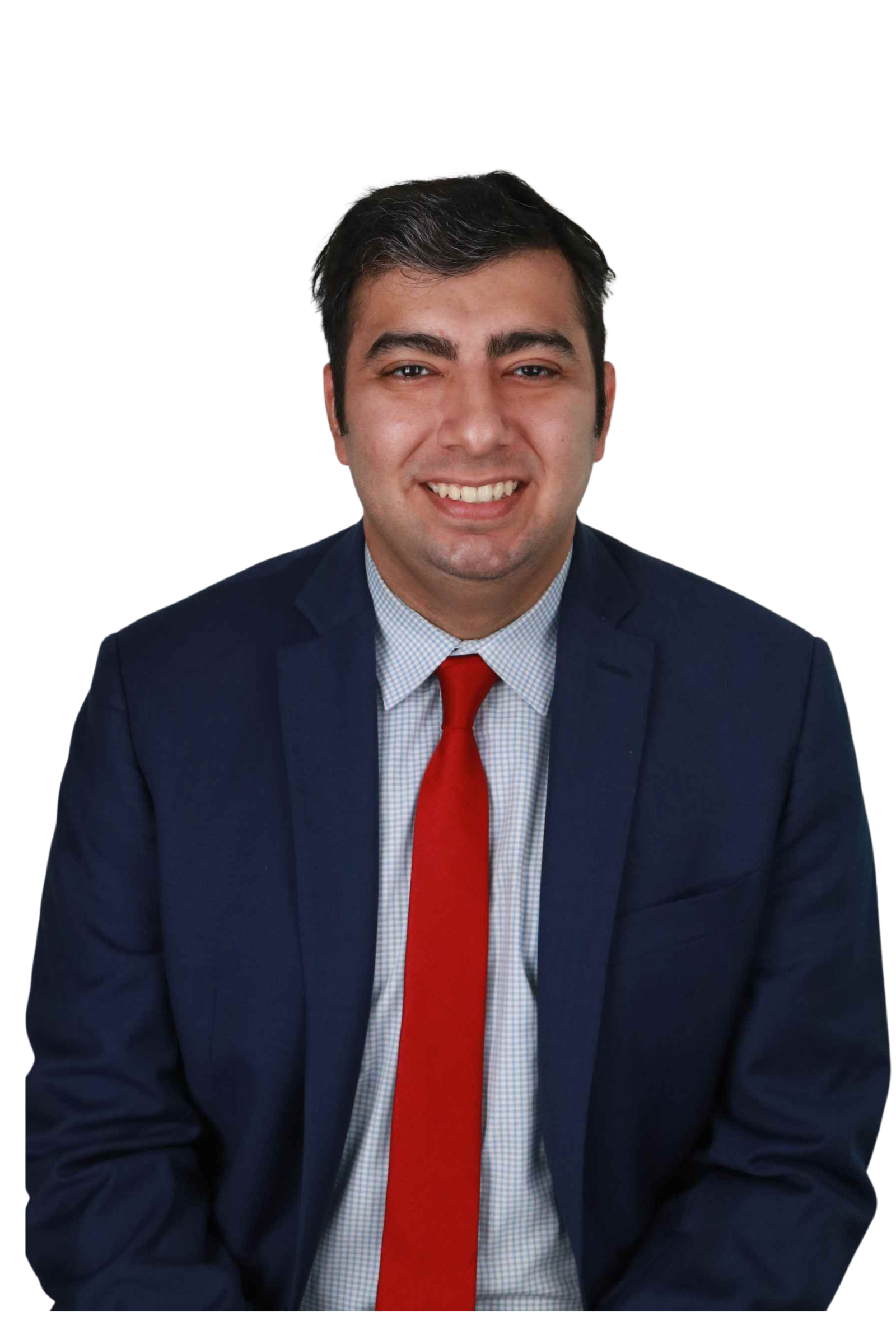
Karim Jivani is an Associate Attorney at Reddy Neumann Brown PC who focuses on employment-based non-immigrant visas. Karim’s practice covers all phases of the EB-1A and EB-2 NIW visa process including filing petitions, responding to Requests for Evidence (RFE), and drafting motions and appeals. Karim has also worked on all aspects of H-1B, L-1, I-140, and VAWA petitions.