
Nonimmigrant Visas Under Siege: A New Era Of Delay Begins
The U.S. Department of State’s March 25, 2026 announcement expanding online presence review for additional nonimmigrant visa applicants is not a minor procedural update. It is a major escalation in visa screening that will have a direct impact on processing times, predictability, and the overall experience of applying for a U.S. visa. Effective March 30, this expanded review will apply to a wide range of categories, including A-3, C-3 domestic workers, G-5, H-3, H-4 dependents of H-3, K visas, Q, R, S, T, and U visas, on top of the already affected H-1B, H-4, F, M, and J visa applicants.
Let us be blunt: this is not just about screening. This is about delay.
For years, visa applicants have already struggled with appointment backlogs, administrative processing, inconsistent standards across posts, and long periods of uncertainty. Now the government is adding another layer by instructing applicants to make all of their social media accounts “public” or “open.” That means officers may now review not only documents, travel history, and interview answers, but also an applicant’s online life. This will not speed anything up. It will slow things down.
“The government calls it vetting for security; everyone else sees another delay tactic..”
The biggest issue is not whether the government has the authority to vet applicants thoroughly. Of course it does. Every country screens foreign nationals. The real issue is proportionality, consistency, and administrative capacity. If consulates are already struggling to process existing caseloads, how exactly will they manage deeper digital reviews across more visa categories without causing serious bottlenecks?
This expansion sends a troubling message: that almost every nonimmigrant visa applicant must now be treated as a digital suspect first and a legitimate traveler second. That is not a healthy direction for a country that depends heavily on students, skilled workers, cultural exchange participants, religious workers, and family-based nonimmigrants.
“A visa interview used to be about your documents; now it is about your digital shadow.”
There is also a practical problem. Social media is messy. Posts can be sarcastic, taken out of context, old, inaccurate, or posted by others. Privacy settings can vary by platform. Many applicants may not even know how to fully open every account or what content may be misunderstood. This creates a dangerous environment where confusion becomes a risk factor.
And let us not ignore the broader effect. Employers, universities, families, and religious organizations all depend on timely visa issuance. If this review becomes another chokepoint, the damage will spread far beyond the individual applicant.
“This is not vetting with a scalpel; this is delay with a government seal.”
The fear here is simple: this may not end nonimmigrant visas on paper, but it may fundamentally change them in practice. A system can remain legally open while becoming operationally impossible.
“The visa category may still exist in the law, but if the wait becomes endless, the visa is dead in real life.”
That is why this announcement matters. It is not just another rule change. It is a warning sign that the nonimmigrant visa system may be drifting toward a model where delay itself becomes the policy.
Need to make changes?
By: Rahul Reddy
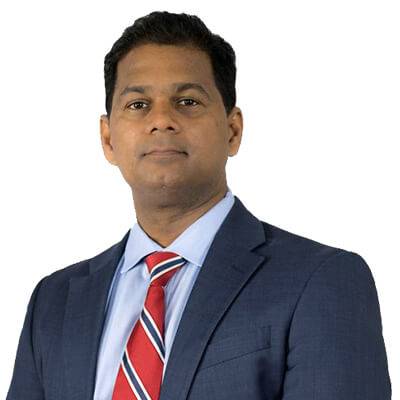
Rahul Reddy is the founding partner of Reddy Neumann Brown PC. He founded our firm in 1997 and has over 28 years of experience practicing employment-based immigration. Rahul‘s vast knowledge of the complex immigration system makes him an invaluable resource and an expert in the field. His personal experience with the immigration system has made him empathetic to each of his clients’ cases and empowered him to help others achieve the American Dream.
Rahul‘s dedication to serving the immigrant community is evident, from his daily free conference calls to his weekly immigration Q&As on Facebook and YouTube Live. He is an active member of the immigrant community and one of the founders of ITServe Alliance. He has been a member of American Immigration Lawyers Association since 1995.
Rahul‘s dedication to serving the immigrant community is evident, from his daily free conference calls to his weekly immigration Q&As on Facebook and YouTube Live. He is an active member of the immigrant community and one of the founders of ITServe Alliance. He has been a member of American Immigration Lawyers Association since 1995.