

What the New F-1 Rule Means for You: A Guide for Current and Future International Students
On July 17, 2026, the Department of Homeland Security published a final rule that changes how long F-1 students can stay in the United States and what they have to do to extend that stay. If you are studying in the U.S. now, planning to come, or supporting a student who is, this is the biggest shift to the student visa in decades, and it takes effect September 15, 2026 (a date DHS says could still change because the rule is subject to congressional review and likely court challenges).
This guide walks through what is actually changing, what you need to do, and the questions students most commonly ask.
The core change: a fixed end date instead of “duration of status”
Until now, F-1 students have been admitted for “duration of status” (often written as D/S). That meant you could stay as long as you were a full-time student in good standing or in authorized practical training, plus a short window to leave afterward. There was no fixed expiration date on your admission.
The new rule ends that. Going forward, you will be admitted for a fixed period of time based on the program length listed on your Form I-20, up to a maximum of four years. On top of that program period, you get a 30-day window before your program start date to arrive and a 30-day window after your program end date to depart. For students on OPT or STEM OPT, the admission period runs to the end date of your program or your employment authorization document (EAD), whichever comes first.
If you need more time than your fixed period allows, you now have two options: apply for an Extension of Stay (EOS) with U.S. Citizenship and Immigration Services (USCIS) before your admission expires, or leave the country and seek readmission at a port of entry.
What you actually have to do now
The practical difference is that extending your stay is no longer something handled quietly inside your school’s records. It becomes a formal application to the federal government. Under the new process, you generally:
- Request an updated Form I-20 from your DSO showing that you need more time, if that applies to your situation.
- File Form I-539, Application to Extend/Change Nonimmigrant Status, with USCIS before your current period of stay ends.
- Pay the required fee.
- Provide biometrics (fingerprints and photo) as required.
- Submit evidence of sufficient funds to cover your studies and living expenses.
The good news for continuing students: if you file your EOS application on time, you are authorized to keep studying full-time while USCIS decides your case. The harder news: if your EOS is denied, there is no grace period, you would be expected to depart the United States immediately.
Not every reason to stay longer will be accepted
DHS has drawn a clear line between legitimate delays and drifting. Acceptable reasons for needing more time to finish your program are: compelling academic reasons (for example, a change of major or research topic, or unexpected research problems); a documented illness or medical condition; or exceptional circumstances beyond your control (such as a natural disaster or the closure of your institution).
What will generally not be accepted is a pattern of academic probation, suspension, or repeated inability or unwillingness to complete your coursework. If you are behind for reasons within your control, an extension is far from guaranteed.
New limits on transfers and changing programs
Beyond the fixed end date, the rule adds restrictions on moving around the U.S. education system that are worth knowing before you plan your path:
- If you change your educational objective or transfer to another SEVP-certified school, you generally must complete your first academic year at the school that issued your initial Form I-20, unless SEVP authorizes an exception.
- Graduate-level students (and above) generally may not change educational objectives during a program, and generally may not transfer schools during a program without a limited exception approved by SEVP for extenuating circumstances.
- Once you complete a program at one level, you may only move to a higher educational level as an F-1 student. Enrolling in another program at the same or a lower level is not allowed while in F-1 status.
- English language training is capped at an aggregate 24 months, including breaks and annual vacation.
- The grace period to prepare for departure after finishing your studies or practical training drops from 60 days to 30 days. The same 30-day departure requirement applies if your program ends earlier than expected.
Questions students are asking
When does this start, and does it affect me right now? The rule takes effect September 15, 2026. Until then, students are still admitted for duration of status. After that date, both new and continuing students entering the U.S. will be admitted with a fixed period.
I’m already here on D/S. What happens to me? DHS has laid out transition procedures. In short, you can generally continue under your current status, but the fixed-period framework applies once you enter or re-enter, or once you need an extension. Check the DHS transition guidance and confirm the specifics with your DSO.
Can I still travel? Yes. Students with unexpired visas can travel and apply for admission at a port of entry, where you would receive a new Form I-94. But be aware: if you re-enter on or after September 15, 2026, you may be admitted with a new fixed period based on the program end date on your Form I-20 (up to four years, plus the 30-day departure window). Plan travel with that in mind.
Do my dependents need to do anything? Yes. F-2 dependents also receive a fixed period of admission, which cannot exceed the principal F-1 student’s authorized period. They must also apply for an extension of stay to remain beyond their Admit Until Date.
I have a pending OPT or STEM OPT application. Do I need to file an EOS too? There is a transition cushion here. Students in the U.S. who timely filed for post-completion OPT or STEM OPT on or before six months of the rule’s effective date generally do not need to file a separate EOS. Outside that window, a student recommended for post-completion OPT generally must apply for both an extension of stay and employment authorization, and may not begin OPT work until the work authorization is granted. Students who timely apply for a STEM OPT extension continue to receive the automatic 180-day extension of employment authorization, which this rule does not change. Confirm your exact situation with USCIS and your DSO.
Why DHS says it made this change, and who is pushing back
DHS frames the rule as a way to improve oversight, deter fraud, and address national security concerns, arguing that the open-ended system made it hard to verify that students were complying with their status. It points to “pay-to-stay” schemes, sham schools, more than 10,000 potential OPT fraud cases identified by ICE, and students who remained enrolled for extraordinarily long periods.
The rule also drew heavy opposition, close to 22,000 public comments. Universities and international-education groups warned of enrollment declines, added administrative and financial burden, harm to research and STEM programs, and damage to the country’s ability to attract global talent. Others raised legal objections over DHS’s authority, the short comment period, and due process and fairness concerns. Because the rule faces congressional review and probable litigation, its September 15 start date is not fully locked in; DHS has said it will publish a notice if the date changes or the rule is terminated.
What to do next
If you are an F-1 student, the most useful steps are practical: find your program end date, understand that extensions now run through USCIS via Form I-539 rather than solely through your school, budget for the fee and biometrics, and account for the shorter 30-day departure window and the new limits on transfers and level changes. Stay in close contact with your DSO, watch for updates on Study in the States and USCIS, and consult a qualified immigration attorney for anything that affects your specific case, because both the details of implementation and the rule’s ultimate fate are still in motion.
By: Felipe Jimenez
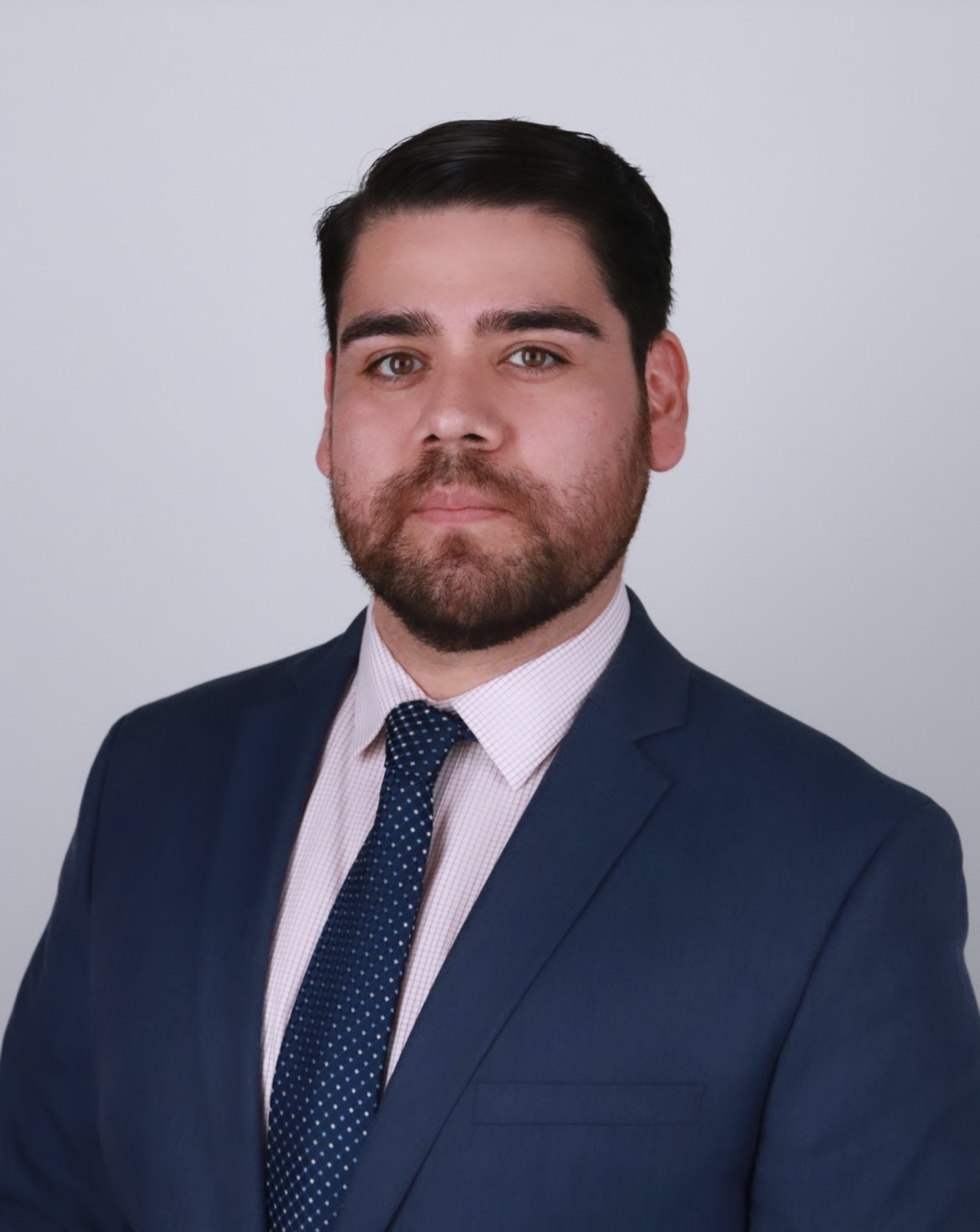
Felipe Jimenez is an Associate Attorney at Reddy Neumann Brown PC. He works in the Non-Immigrant Visa (NIV) Department where he assists clients through all phases of the non-immigrant visa process.
Reddy Neumann Brown PC has been serving the business community for over 20 years and is Houston’s largest immigration law firm focused solely on US. Employment-based immigration. We work with both employers and their employees, helping them navigate the immigration process quickly and cost-effectively.